
Medicare Prescription Payment Plan 2026 Updates
What is the Medicare Prescription Payment Plan?
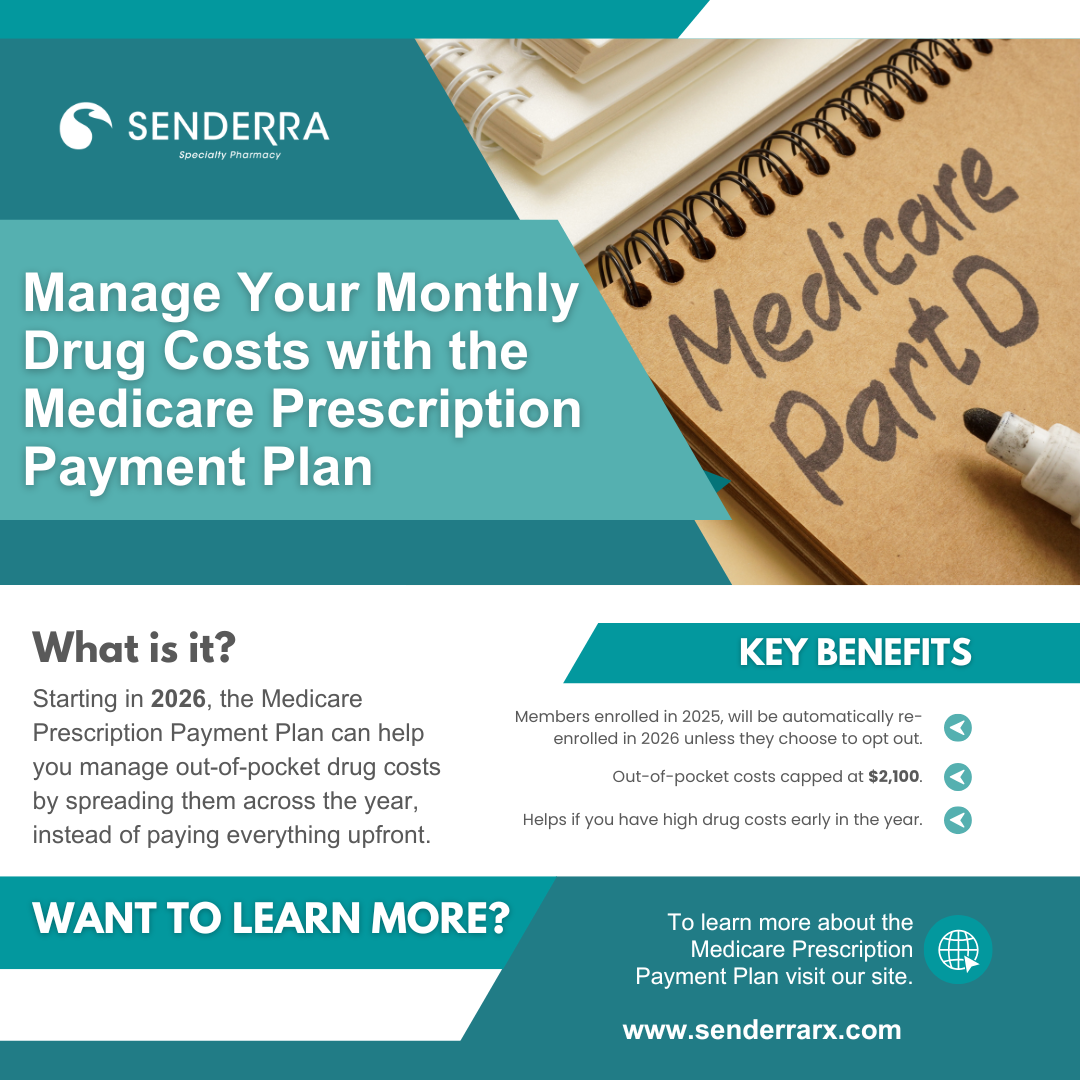
The Medicare Prescription Payment Plan is a payment option that works with your current drug coverage to help you manage your out-of-pocket Medicare Part D drug costs by spreading them across the calendar year (January– December). Anyone with a Medicare drug plan or Medicare health plan with drug coverage (like a Medicare Advantage Plan with drug coverage) can use this payment option for drugs covered by Part D. All plans offer this payment option, and participation is voluntary.
If you select this payment option, each month, you’ll continue to pay your plan premium (if you have one), and you’ll get a bill from your health or drug plan to pay for your prescription drugs (instead of paying the pharmacy). There’s no cost to participate in the Medicare Prescription Payment Plan, and you won’t pay any interest or fees on the amount you owe, even if your payment is late.
When you fill out a prescription for a drug covered by Part D, you won’t pay for your pharmacy (including mail order and specialty pharmacies). Instead, you’ll get a bill each month from your health or drug plan. Your monthly bill is based on what you would have paid for any prescriptions you get, plus your previous month’s balance, divided by the number of months left in the year.
Even though you won’t pay for your drugs at the pharmacy, you’re still responsible for the costs. If you want to know what your drug will cost before you take it home, call your plan or ask the pharmacist.
Note: Your payments might change every month, so you might not know what your exact bill will be ahead of time. Future payments might increase when you fill out a new prescription (or refill an existing prescription) because, as new out-of-pocket drug costs get added to your monthly payment, there are fewer months left in the year to spread out your remaining payments.
Will this payment option help me?
It depends on your situation. If you have high out-of-pocket drug costs earlier in the calendar year, this payment option spreads out what you’ll pay each month across the calendar year (Jan – Dec), so you don’t have to pay out-of-pocket costs to the pharmacy. This payment option might help you manage your monthly expenses, but it doesn’t save you money or lower your drug costs. Visit Medicare.gov/basics/costs/help/drug-costs to learn about programs that can help lower your drug costs
How do I know if this payment option might not be the best choice for me?
This payment option might not be the best choice for you if:
- Your yearly drug costs are low.
- Your drug costs are the same each month.
- You’re considering signing up for the payment option late in the calendar year (after September).
- You don’t want to change how you pay for your drugs.
- You get or are eligible for Extra Help from Medicare.
- You get or are eligible for a Medicare Savings Program.
- You get help paying for your drugs from other organizations, like a State Pharmaceutical Assistance Program (SPAP), a coupon program, or other health coverage.
Who can help me decide if I should participate?
- Your health or drug plan: Visit your plan website or call your plan to get more information. If you need to pick up a prescription urgently, call your plan to discuss your options.
- Medicare: Visit gov/prescription-payment-plan to learn more about this payment option and if it might be a good fit for you.
- State Health Insurance Assistance Program (SHIP): Visit shiphelp.org to get the phone number for your local SHIP and get free, personalized health insurance counseling.
How do I sign up?
Visit your health or drug plan website or call your plan to start participating in this payment option at any time during the plan year.
Key Changes in 2026
Increased OOP Cap at $2,100
The out-of-pocket (OOP) cap will be $2,100 instead of $2,000 in 2026 thanks to the Inflation Reduction Act. This means that you’ll never pay more than $2,100 in your total annual drug costs in Part D (deductibles, copays, coinsurance) in 2026. This is true for everyone with Medicare drug coverage, even if you don’t join the Medicare Prescription Payment Plan.
Automatic Re-Enrollment from 2025
Also starting in 2026, members enrolled in 2025 will be automatically re-enrolled in 2026 unless they choose to opt out. For those who opt out, plans must process the removal within three calendar days.
Medicare Drug Price Negotiation Program
Beginning January 1, 2026, Medicare will take a major step toward improving prescription drug affordability through the Medicare Drug Price Negotiation Program, established by the Inflation Reduction Act. For the first time, Medicare has negotiated prices directly with manufacturers for select high-cost, high-utilization medications covered under Medicare Part D. These negotiated amounts—known as Maximum Fair Prices (MFPs)—will apply nationwide and are designed to lower overall drug costs and reduce out-of-pocket spending for beneficiaries.
To further support affordability, the Medicare Prescription Payment Plan works alongside these negotiated prices by allowing eligible beneficiaries to spread their out-of-pocket prescription drug costs over the course of the plan year, rather than paying large amounts upfront at the pharmacy counter. This can be especially meaningful for patients with specialty or chronic medications, helping improve access, adherence, and financial predictability.
Drugs with Negotiated Prices Effective in 2026
CMS selected 10 Part D drugs for the initial price applicability year based on Medicare spending and utilization:
- Eliquis® – blood thinner
- Jardiance® – diabetes, heart failure
- Xarelto® – blood thinner
- Januvia® – diabetes
- Farxiga® – diabetes, heart failure, chronic kidney disease
- Entresto® – heart failure
- Enbrel® – autoimmune conditions
- Imbruvica® – certain blood cancers
- Stelara® – autoimmune diseases
- Fiasp® and NovoLog® – insulin products
What This Means for Patients and Providers
For patients, these changes may result in lower costs at the pharmacy and improved budget predictability. For providers, negotiated pricing and payment smoothing may help reduce cost-related nonadherence and support more consistent therapy initiation and continuation.
As a specialty pharmacy, we remain committed to helping patients and providers navigate these changes—answering questions about coverage, coordinating benefits, and ensuring access to essential medications as these new Medicare policies take effect.

 Senderra

 Senderra: Oct 2, 2026, 10:00:00 AM